
Discreet unmarked vehicles on every visit
Wasp nest removal in London
Wasp nest removal in London: a technician in protective kit treats the nest at its entrance with a professional insecticidal dust, usually in one visit, and we identify hornets and bees before anything is treated. Same-day visits are often possible, Monday to Saturday, with a free inspection survey, a fixed written quote and a written six-month guarantee, subject to the site survey.
- Checkatrade approved
- DBS checked staff
- RSPH Level 2 certified
- Fully insured
- Six-month guarantee
In short
How wasps & hornets treatment works
Wasp nest removal is a treatment, not a physical removal. The technician follows the flight line to the true entrance, then applies a professional-use pyrethroid insecticidal dust into it, to the HSE-authorised label. Returning workers carry the dust through the nest and the colony collapses, usually within 24 to 48 hours. Since bendiocarb dust was withdrawn in January 2025, a nest deep in a wall cavity or roof void sometimes needs a second application. The empty nest is left in place; wasps never reuse one.
Every treatment carries a written six-month guarantee, subject to the site survey. If the treated pest returns inside the six months, we come back and re-treat at no charge.
Signs to look for
Do you have a problem?
- Wasps streaming in and out of one gap under the tiles or an air brick
- A grey papery nest in the loft, shed, garage or under decking
- Rasping from a wall cavity as workers chew wood into nest paper
- Numbers climbing through July to September as the colony passes several thousand
- Brown-and-yellow insects up to 3.5 cm around a tree hollow: European hornets
- A dark hornet with one orange band and yellow leg tips: a possible Asian hornet
Not certain? Send us a photo — we identify it before you commit to anything.
Our process
What a visit involves
Identify
A free inspection survey confirms wasps rather than bees or hornets: bees are not treated and a suspected Asian hornet is reported, not treated.
Locate
We follow the flight line to the true entrance, often not where the wasps are seen, and check a loft for signs of bats first.
Treat
A professional-use pyrethroid dust goes into the entrance, to the HSE-authorised label, by a technician in full protective kit.
Collapse
Returning workers carry the dust inside and the colony dies off, usually within 24 to 48 hours; the nest stays where it is.
Follow-up
If the nest is still active after 48 hours we return and treat again, under the written six-month guarantee, subject to the site survey.
Wasp control methods compared: dust, spray, foam and removal
Common wasp colonies hold more than 3,000 workers by late summer, each 12 to 17 mm long with a queen of about 20 mm. The queen founds the nest in April in a wall cavity, roof space or hollow tree and the colony dies around October; nests are never reused.
Insecticidal dust puffed into the entrance is the professional method: workers walk it through the nest and the colony collapses. Until 25 January 2025 that dust was bendiocarb. Its replacements are pyrethroid dusts, which BPCA notes are faster-acting and often repellent, so spray-and-walk-away no longer works, and a 2025 trade trial found most inaccessible nests needed two visits and some three. Sprays and foams suit an exposed nest in a shed; physical removal only makes sense where the nest is fully visible.
What affects the cost of wasp nest removal
One accessible nest is the simplest job. The price rises with height and access; with each additional nest; and with a cavity or roof-void nest that may need a second dust since bendiocarb went. Removing the physical nest is extra work.
For comparison, Hounslow charges £87.50 per nest from 1 April 2026, £30 per extra nest, with a free re-treat if the nest is still active after 48 hours. Wandsworth charges £86 from 1 April 2026, and Kensington and Chelsea £101.90 per nest on its 9 July 2026 list, with a £63.90 refund if bees are found.
We start with a free inspection survey, give a fixed written quote and charge no call-out fee.
Preparing for the visit and what happens after
Before we arrive:
- Note where the wasps enter and leave
- Keep children and pets indoors and shut the windows nearest the nest
- Do not block the entrance or spray the nest beforehand; that makes the colony aggressive
After the visit:
- Stay away from the entrance for the rest of the day
- Leave the dust in place and do not seal the hole until all activity has stopped
- If the nest is still active after 48 hours, call 020 3411 2329 and we return under the written six-month guarantee, subject to the site survey
NHS advice for stings is to scrape the sting out sideways with a fingernail or card and hold a cold pack on it for at least 20 minutes; to get urgent help from 111 or a GP if you were stung in the mouth, throat or near the eyes, stung more than once, or have reacted badly before, and to call 999 if the lips, mouth, throat or tongue swell or breathing is difficult. See NHS insect bites and stings.
Who is responsible for wasps: the law on nests, bees, bats and hornets
Nothing in the sources we rely on restricts destroying a wasp nest in England. In a rented home, Shelter's guidance, updated 1 May 2026, makes the landlord responsible for pests present at move-in or let in by a repair they owe, and a nest in a roof void or communal area goes to the landlord, agent or freeholder.
All bats and their roosts are fully protected: GOV.UK lists disturbing a bat in a structure as an offence, and wasp control in a loft can affect a roost, so if we find signs of bats we stop and refer you to the National Bat Helpline. Bees are not treated; the BBKA's volunteer swarm collectors take honey bee swarms. The European hornet has no specific legal protection in any source we rely on and is less aggressive than the common wasp, so we treat it only where it is a real risk. A suspected Asian hornet is reported through the Asian Hornet Watch app and never treated privately.
Where in London we treat wasps and hornets
Wasp calls peak in July and August. Across central, west, north-west, north and south-west London and the TW postcodes, the busiest wasp nest removal work is in the roof voids and soffits of Edwardian terraces in Wimbledon, Streatham, Tooting and Balham, and in the wall cavities of Victorian houses in Chiswick, Acton and Hammersmith. Mansion-block bin stores in Westminster and Kensington bring late-summer calls when foraging wasps swarm outdoor tables. The TW postcodes around Hounslow, Isleworth and Richmond, where neither Richmond nor Kingston runs a wasp service, produce most of our hornet nest removal work, and Sunbury TW16 was on the 2026 Asian hornet sightings list: 201 credible sightings and 66 nests nationally to 17 September 2026, with Greater London monitored but no confirmed London nest. Pub gardens and terraces are covered by our commercial contracts, and if you searched wasp nest removal near me from any of these postcodes we can usually attend the same day.
Reviewed by Pest Stop Control's RSPH Level 2 technical team, October 2026
Accreditations
Credentials you can check
Checkatrade
Independently reviewed by verified customers after every job.
RSPH Level 2
Every technician holds the RSPH Level 2 Award in Pest Management.
Fully insured
Public liability cover for domestic and commercial premises.
Covering Central London · West London · North-West London · North London · South-West London · City of London · Westminster · Kensington & Chelsea · Camden · Islington · Hammersmith & Fulham · Haringey · Richmond upon Thames · Hounslow.
Google reviews
5.0from 55 reviews on Google
Absolutely brilliant service. They are friendly, professional, reliable and knowledgeable. We have a warehouse in an arch and it’s a constant battle, but we are definitely winning! I highly recommend.
 Natacha McManus · a month ago
Had cockcroach and mice issues in the house. Hashim came for 2 seperate visits and had been very efficient and proficient in identifying entry points, closing them , setting traps and doing proofing. 100% recommend
 Matthew Lee · a month ago
Our coffee shop was closed by council due ro rodent issue. We contacted pest stop. They came same day for emergency call out. They inspected the property did the treatment same day. They submitted detailed inspection report for compliance came for next visit and did the proofing work to close entry points. We passed the reinspection from council and opened the shop again. Big help from pest stop for quick and excellent service.
 khimanirafi K · 5 months ago
I had been struggling with a serious cockroach infestation that quickly got out of control, and it was becoming a major hygiene and health concern. After searching for a reliable and top-rated pest control company, I decided to contact Pest Stop Limited—and it turned out to be an excellent decision. From the initial inspection, their team showed a high level of professionalism and expertise. They carried out a detailed assessment of the property, identified the root cause of the infestation, and implemented a well-structured treatment plan using advanced residual insecticide solutions specifically designed for cockroach control. A special thanks to their technician, Mohammad, who was extremely polite, knowledgeable, and clearly an expert in his field. He took the time to explain the entire process, including cockroach behaviour, breeding cycles, and how their treatment targets both visible and hidden infestations. His advice on preparation, cleanliness, and prevention worked perfectly and made a noticeable difference throughout the treatment process. The treatments were carried out over multiple visits to ensure complete eradication, using industry-grade products that are both highly effective and safe. Their residual treatment created a long-lasting barrier, preventing re-infestation and ensuring the problem was dealt with at its source. The results have been outstanding—no more sightings, no more concerns. The infestation has been completely eradicated, and the peace of mind this has brought is invaluable. If you’re searching for: * Professional cockroach extermination * Reliable pest control services * Affordable and effective pest removal * Long-lasting residual treatments * Trusted local pest control experts Pest Stop Limited is the company you can rely on. Their expertise, attention to detail, and commitment to delivering real results truly set them apart. Highly recommended to anyone dealing with cockroach infestations or any pest-related issues. Five stars without hesitation.
 Rubina · 7 months ago
We recently started getting bitten at home and suspected bed bugs. We contacted Pest Stop and their team quickly carried out an inspection and found a bed bugs infestation. Their technicians were very professional, knowledgeable, and explained the bed bugs treatment clearly. The bed bugs treatment was carried out quickly and effectively, and the problem was resolved in no time. We are very happy with the service and highly recommend Pest Stop to anyone dealing with a bed bugs problem or needing professional bed bugs treatment.
 Obaid Habibi · 7 months ago
Reviews from Google Maps
Wasps & Hornets FAQ
What customers ask before booking
Is wasp nest removal dangerous?+
For an untrained person, yes: a mature colony has thousands of workers that can each sting repeatedly, and disturbing the nest brings them out. A technician in full protective kit treats the entrance in minutes; stay clear for a day or two after.
Is it a wasp nest or a beehive?+
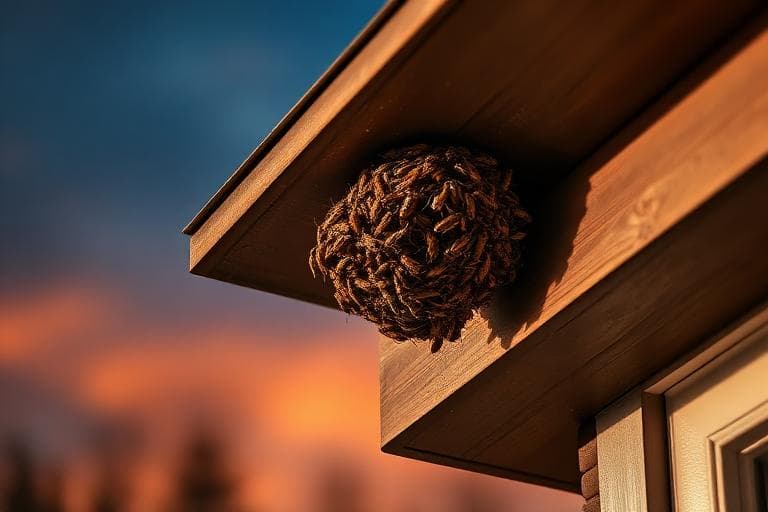
Wasps are bright black and yellow with a narrow waist and come from a grey papery nest; honey bees are browner and furrier, and a swarm is a rugby-ball cluster of thousands. We do not treat bees; a BBKA swarm collector does.
Is wasp powder dangerous to humans?+
Professional insecticidal dust is a professional-use only product applied strictly to the HSE-authorised label, into the nest entrance and nowhere else. Keep people and pets away from the entrance until activity stops and do not touch the residue.
What month do wasps go away?+
Around October, when the queen dies and the workers die off with the cold. Late August and September are the worst weeks for stings, because BPCA notes that idle workers seek sugar and fermented fruit and turn aggressive.
When do wasps start building nests?+
In April, when the queen founds a nest in a wall cavity, roof space or hollow tree; workers appear from late May and the colony reaches several thousand by July. A nest is never reused, so last year's empty nest is not the problem.
Is it illegal to destroy a wasp nest?+
No source we rely on shows any legal restriction on destroying a wasp nest in England. The restrictions are on what is near it: bats and their roosts are fully protected, bees are not treated, and a suspected Asian hornet is reported rather than treated.
How do I identify an Asian hornet?+
Mostly dark, almost black, with a single orange-yellow band near the tail, an orange face and distinctly yellow leg tips, and smaller than the European hornet, which is much more yellow and brown. A common wasp is smaller still, with bold stripes along the whole abdomen.
Who do I report an Asian hornet to?+
Use the free Asian Hornet Watch app or the online form, with a photo; sightings go to the Non-Native Species Secretariat for the National Bee Unit. Do not spray, knock down or block a suspected nest. We report suspected Asian hornets and do not treat them.
Are hornets protected in the UK?+
Not in any source we rely on: the Wildlife Trusts list the European hornet as common, and it is less aggressive than the common wasp, so we treat a hornet nest only where it is a genuine risk. The invasive Asian hornet is reported to the National Bee Unit.
How much does wasp nest removal cost?+
One accessible nest is a fixed price agreed before we attend; it rises for a nest at height that needs access equipment, for each extra nest and for a cavity nest likely to need a second dust. There is no call-out fee and the survey is free.
Other services
Areas we cover
Same-day callouts across London
See every area and postcode we cover →Need it dealt with today?
Same-day slots across London. Speak to a technician, not a call centre.